Off-Grid vs On-Grid Solar Panel Systems:Complete Guide
Choosing to switch to solar energy, you will have to decide in the very first place whether to be completely self-sufficient or to have some connection with the power grid. This is the Off-Grid vs On-Grid Solar Panel Systems dilemma. The two options offer various benefits and disadvantages in terms of cost, reliability, and flexibility. It is very crucial to make the right choice in Pakistan, where electricity outages (load shedding) are still very common in many places. In the article, we are going to discuss Off-network solar systems UK (for UK context comparisons), on-grid solar systems UK, off-grid solar vs grid-tied, and others, keeping the Pakistani users in mind all the way through.
1. What Is Off-Grid vs On-Grid Solar Panel Systems?
- On-grid (grid-tied) means that your Off-Grid vs On-Grid Solar Panel Systems is connected to the public electricity network. When your panels generate more energy than you use, you sell the excess power to the grid and (in some places) get credit.
- Off-grid means that your system is not dependent on the electrical network at all but works on its own.
- A hybrid setup combines both: you are still wired to the grid, but you have battery storage as well, and you can quickly go off-grid in case of a blackout.
The Difference between on-grid and off-grid solar concerns the connections to the power network (or lack of it!) and the way to manage surpluses or areas with power outages that result in an energy shortage.
2. Comparison: On-grid solar panel installation vs Off-grid solar panel installation
| Features | On-grid solar panel installation | Off-Network Solar |
| Dependent on the grid | Yes, if you require backup or sell because of surplus production | No, it can work on its own, which is a win-win |
| Essential batteries | Depends on how much the user wants to spend on the cost | An absolute necessity if you want to acquire a system |
| Investment | Cheaper (without batteries) | Most expensive (batteries + extra installed capacity) |
| Performance during a power cut | Usually unreliable (unless used in tandem with a battery model) | Excellent with its own power system |
| Complexity | Easily managed | More sophisticated |
| Maintenance | Simple to look after, | Battery maintenance, control systems are complex to manage |
Have a look at the differences that crop up in the table.
3. On-grid solar systems UK & how they compare
In the U.K., there are scores of homes that boast having grid-tied systems in place that reap heavily from the feed-in tariff renderings or from net-metering privileges. These systems revert to the grid when there is no solar production to feed the home on gloomy days or at night. This model can be put into practice in Pakistan, too, in order to feed the surplus power back to the grid (where allowed) or give the grid a break and supply less energy as the case arises. The benefit is for relatively less costly systems (since battery storage is optional) and also a simpler setup.
4. Off-grid solar panel installation UK & relevance to Pakistan
In remote areas of the UK where the national grid does not reach, off-network solar power systems are quite common. These systems consist mainly of batteries, inverters, charge controllers, and, in most cases, even a backup generator. On the other hand, in Pakistan’s countryside and the hilly and desert regions, off-grid photovoltaic systems can be considered as a viable solution provided that the grid access service is not reliable or simply does not exist.
5. Cost Considerations: Off-grid solar system cost UK
Consequently, the cost of off-grid setups in the UK is high in terms of dollars per watt because of the expensive batteries, large numbers of panels, and backup systems. In Pakistan, the cost factor is mainly due to batteries and the applicable duty. However, an off-grid PV system gives the user the autonomy of producing and using power, and at the same time, it serves as a protection against power cuts. In all comparisons, please take into account the system’s total costs, including battery replacement and maintenance.
6. Benefits & Drawbacks: Off-grid solar vs grid-tied
Off-grid and on-grid are solar panel installation of have their own pros and cons:
Advantages of Off-grid:
- Being able to generate and store energy without the need for power cuts.
- Compensating your bills with the power of the sun.
- Only for areas not connected to the grid.
Disadvantages:
- Unfortunately, the off-grid photovoltaic systems requires a significant initial investment.
- Besides, the batteries and power management should be kept and serviced by customers.
- The equipment is technically more sophisticated and also more expensive.
Advantages of On-grid:
- Cheaper systems (no batteries needed or fewer).
- Easier to install and operate.
- The commands and benefits of exporting the excess power can be utilized if government laws allow.
Disadvantages:
- The system’s and the user’s battery power are off when there is no grid (if the battery is not added).
- Furthermore, the system is affected by the utility’s rules, prices, and regulatory requirements.
7. Installation Tips: Off-grid solar panel installation & On-grid solar panel installation
Off-grid solar panel installation:
- The panels should be of an exaggerated size to compensate for the highest usage + related losses.
- Install top-quality batteries (lead-acid, lithium, or deep cycle).
- The purpose of employing the charge controller is to prevent overcharging/discharging.
- Having a backup generator (diesel or hybrid) for long cloudy spells is another smart idea.
On-grid solar panel installation:
- On-grid solar panel installation size of the system should be chosen according to the day’s load; the grid will power the night load.
- A net or bi-directional meter can be used in your region.
- It is to be ensured that the inverter meets the grid connection standards.
- Always check the regulations and permissions required from the local utility company.
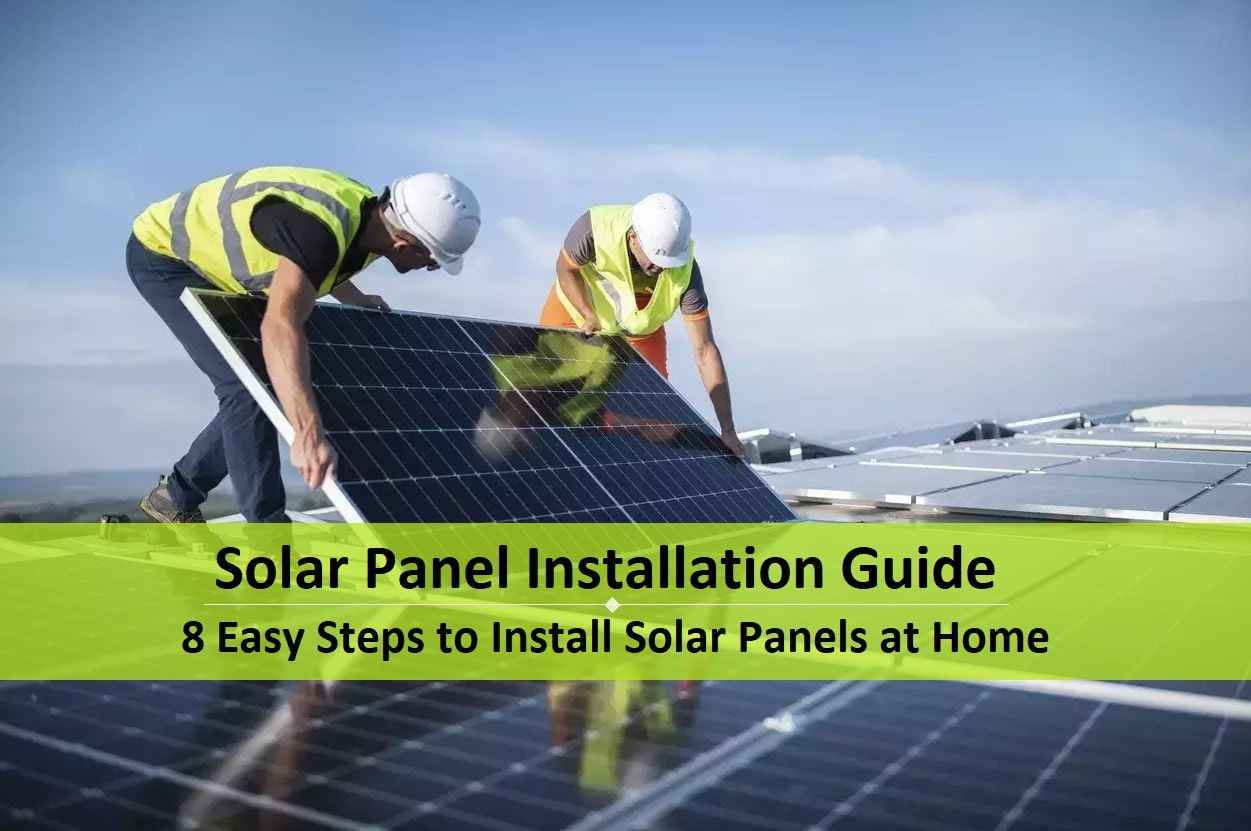
Inverter, orientation, panel size, and the quality of wiring also affect the produced Energy. In the same manner in dust, heat, and storms also affect the fixed solar panel performance a lot, especially in Pakistan.
8. Hybrid vs Off-Grid: Off-Grid vs On-Grid Solar Panel Systems
The Off-Grid vs On-Grid Solar Panel Systems here combines both models and is attached to the grid in addition to having battery storage for contingency situations. Solar power is the most widely used and consumed energy source among all the alternative energy sources. During a power cut, the batteries take over, and a part of the electricity supplied is cut off. For the majority of users, grid-connected solar power with backup storage is a good alternative. The lower cost of the grid plus the reliability of the off-grid backup are selling points in favor of the hybrid system. The aggregate result of each of the thirty-seven optimization schemes is the evolution of a hybrid system described as a practical option to the most dangerous off-grid system, such as the batteryless case. Solar power supported with the grid is often, if not always, the best choice whenever the grid is relatively stable.
9. Best Systems: Best Off-Grid vs On-Grid Solar Panel Systems UK
While in the solar panel installation, the best off-grid systems are those that can generate solar power, easily store it with batteries, and have another power source for backup. Not just that, they also have the most efficient panels, inverters, and storage systems. solar panel installation total daily charging and discharging cycles that the batteries have to go through would directly affect the cells that are responsible for the battery systems and, hence, the relationship. On-grid solar panel installation system is also large enough to meet power demands for the entire week due to the wall-mount battery.
10. Which Off-Grid vs On-Grid Solar Panel Systems Suits Pakistan?
solar panel installation reader will learn of the various factors that Pakistani households need to take into consideration as they decide on which system they should install:
- Cities and towns with a good and reliable supply of electricity: It is preferred that they go with On-grid (or hybrid).
- Places where there is disruption in the power supply very often: They could go for a hybrid or off-grid system with a backup battery.
- Villages situated very far from the town where there is no grid: Only a Pure off-grid system will work for them.
- Those who are very sensitive about the cost: In case they watch over the initial cost, on-grid would be cheaper, whereas off-grid is more expensive but will give you freedom.
- The customer care service that is required for constant maintenance: Of the two systems, off-grid requires regular maintenance, while on-grid is more straightforward.
11. Summary Table: Off-Grid vs On-Grid Comparison
| Aspect | On-Grid / Grid-Tied | Off-Grid / Standalone |
| Connection to the grid | Yes | No |
| Battery requirement | Optional or small | Mandatory and large |
| Upfront cost | Lower | Higher |
| Independence | Low | High |
| Maintenance | Low | Higher (battery checks, system balance) |
| Power during outages | Usually none | Full power is sized properly |
| Complexity | Simpler | More complex |
| Use case | Urban, grid availability | Remote, unstable grid areas |
Conclusion
The choice between off-grid and on-grid solar makes a huge difference in the case of solar energy’s installation in Pakistan. On-grid systems are efficient in the sense of keeping the initial cost low, and they are also very easy to operate; however, one will need an additional battery backup if he/she want power during a power outage. Off-network solar systems come with more orders and the nature of maintenance, but the user will be able to live totally independent and free. Hybrid systems are the compromise solution.